The Battle of ‘นักสื่อสารชาติพันธุ์’ vs. ‘หินลาดใน’: Confronting the Crisis of Flooding in Huai Hinlad Nai
On September 27, 2017, a television station reported a dire situation in the community of Huai Hinlad Nai, Wiang Pa Pao District, Chiang Rai Province, where flooding occurred on September 23, 2017. The incident was believed to have been caused by deforestation leading to landslides that resulted in the severe flooding of the area. The social media page “โพควา โปรดักชั่น” posted a message regarding the Hinlad Nai community in Ban Pong, Wiang Pa Pao District, Chiang Rai Province, addressing the aftermath of the devastating flooding. The community suffered significant damage, sparking questions and observations from experts, online media, and concerned individuals about the cause and its connection to the ongoing issue of PM 2.5 pollution. In an effort to promote a better understanding and collaborative problem-solving approach, โพควา gathered relevant information to address the environmental challenges systematically and fairly.
**The Resilient Community of Huai Hinlad Nai**
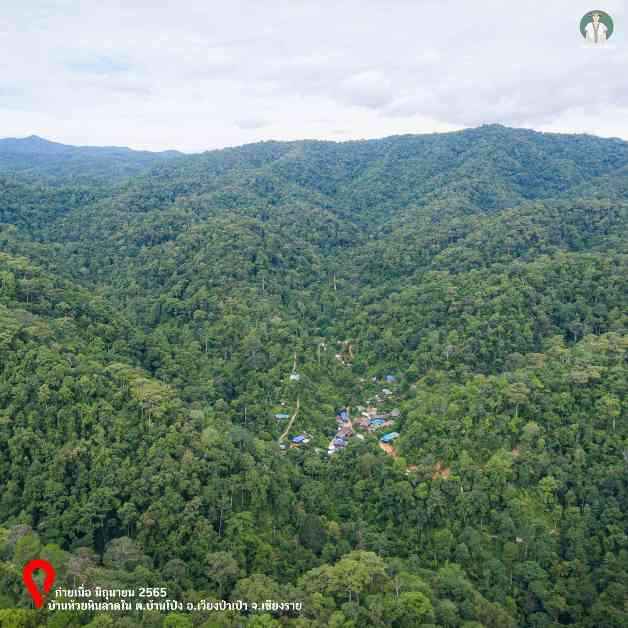
The community of Hinlad Nai in Ban Pong, Wiang Pa Pao District, Chiang Rai Province, is a small village nestled in a vast forest with a history spanning over a century. With a total area of approximately 10,279.7 acres, the community resides in a primary forest watershed area at an elevation of 800-900 meters above sea level. It is characterized by numerous streams and tributaries flowing into the plains. The village is divided into various zones, including residential areas, schools, rice fields, orchards, and communal forests. The diverse agricultural practices in the community encompass mixed cultivation systems with a variety of plant species, including timber and tea trees, which form the economic backbone of the local population.
**Facing the Challenges of Environmental Crisis**
Despite being recognized as a model community for sustainable resource management, the recent flooding incident has raised questions about the origin of the floodwaters. The Hinlad Nai community boasts a lush forest cover and effective resource management practices, making it a prime example of environmental stewardship. However, the unrelenting heavy rains led to an unprecedented influx of water that overwhelmed the community’s natural capacity to absorb and channel the excess water, resulting in catastrophic flooding. This phenomenon is not unique to Thailand but is a global issue exacerbated by climate change and the increasing frequency of extreme weather events.
**Navigating the Global Environmental Crisis**
As Thailand grapples with the impacts of global warming, the northern region, including Chiang Rai, is particularly vulnerable to climate-related disasters. The recent flooding in Huai Hinlad Nai reflects the interconnectedness of environmental challenges and the urgent need for comprehensive solutions. Agriculture remains the most affected sector, with over 12 million Thai farmers facing significant risks due to climate change. The country’s vulnerability underscores the necessity of implementing adaptive measures across all sectors, from economic policies to social welfare programs, to mitigate the impacts of global warming.
**Conclusion**
The devastating flooding in Huai Hinlad Nai serves as a stark reminder of the urgent need to address the global environmental crisis. As communities worldwide face the escalating challenges of climate change and extreme weather events, it is imperative to adopt a holistic approach that integrates sustainable practices, policy reforms, and community engagement. By learning from the experiences of Hinlad Nai and other affected areas, we can work towards building a more resilient and sustainable future for all.