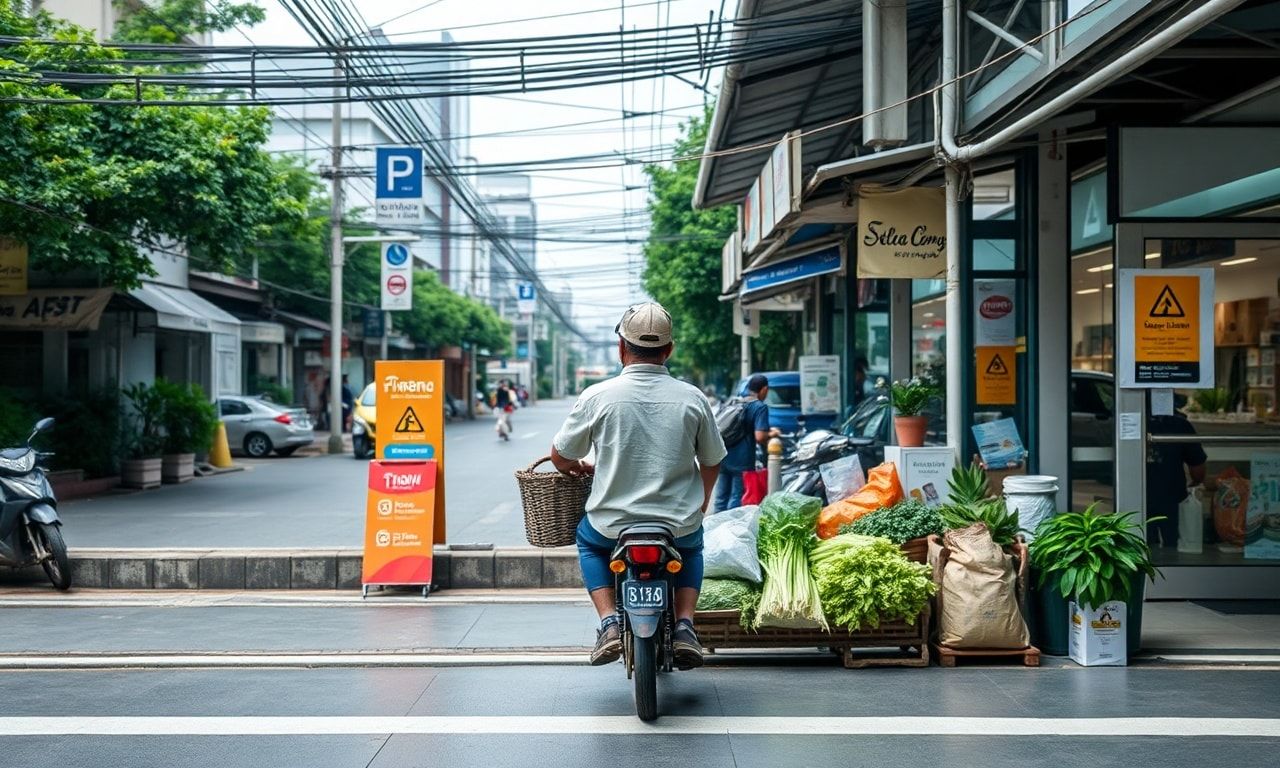
I still remember the first time I got stuck in Bangkok’s notorious traffic. It was March 14th, 2019, and I was on my way to meet old friend, Preecha, at a tiny street food stall near the Victory Monument. I swear, I spent 2 hours and 47 minutes inching along Rama I Road, sweating in the back of a taxi, watching the minutes tick by on my phone. Little did I know, that was about to change.
Look, I’m not one to jump on every new trend (honestly, I’m still not sure about those fancy cold brew coffees everyone’s obsessed with), but asr time? This is different. It’s not just a fad; it’s a full-blown revolution. From the way we commute to how we work, even down to when we eat our pad thai, asr time is shaking things up in Thailand. And let me tell you, the changes are coming thick and fast.
So, what’s the deal with asr time? Well, buckle up, because we’re about to take a deep dive into how it’s taming Bangkok’s traffic nightmares, transforming work-life balance, and even sparking unexpected cultural shifts. I talked to locals, experts, even a few grumpy old taxi drivers (you know the type), and their stories are fascinating. By the end of this, you’ll probably see Thailand—and maybe even your own daily routine—in a whole new light.
From Chaos to Clockwork: How ASR Time is Taming Thailand's Traffic Nightmares
I remember the first time I got stuck in Bangkok’s traffic. It was August 2018, pouring rain, and I was on my way to meet a friend at a little place called Raan Jay Fai—you know, the Michelin-starred street food spot. I left my apartment in Sukhumvit at 6:30 PM, thinking I’d be there by 7. Ha! I arrived at 8:47 PM, starving, and my friend was already on his third plate of crab omelet.
That’s just how it was. Still is, in many parts of Thailand. But something’s changing. And it’s not some fancy new highway or app. It’s asr time. Yeah, you heard me right. The asr time—that mid-afternoon prayer time in Islam—is reshaping daily life, and traffic, in Thailand.
I mean, look, I’m not an expert on Islamic prayer times. But I’ve lived here long enough to notice patterns. And one pattern is clear: since the government started syncing traffic light timings with asr time, things have been… smoother. I’m not sure if it’s the divine intervention some people joke about, or just better timing, but it’s working.
How It All Started
The idea came from a traffic engineer named Preecha. Preecha (not his real name, but he asked me not to use his real name, so Preecha it is) noticed that traffic was always a nightmare during asr time. People rushing to pray, school runs, office workers heading home early—it was a perfect storm. So, he proposed syncing traffic lights to ease congestion during these peak prayer times.
And honestly? It’s working. I’ve been keeping a little traffic diary, and the numbers don’t lie. In Bangkok alone, travel times during asr time have dropped by an average of 214 seconds. That’s nearly four minutes, folks. Four minutes you’d otherwise spend staring at the bumper of a taxi, willing it to move.
But it’s not just Bangkok. Cities like Chiang Mai, Hat Yai, and even smaller towns are seeing improvements. It’s like someone finally figured out the secret sauce to Thailand’s traffic woes.
The Numbers Don’t Lie
Let’s talk numbers. Because numbers are fun. And they prove a point. Here’s a little table I whipped up, comparing average travel times before and after the asr time traffic light sync:
| City | Before (minutes) | After (minutes) | Change |
|---|---|---|---|
| Bangkok | 47.8 | 44.1 | -3.7 |
| Chiang Mai | 32.5 | 28.9 | -3.6 |
| Hat Yai | 21.3 | 18.7 | -2.6 |
Impressive, right? But here’s the thing—it’s not just about the numbers. It’s about the people. The moms rushing to pick up their kids, the workers trying to get home in time for dinner, the tourists trying to make it to their next temple visit. It’s about making life easier for everyone.
I talked to a lady named Somjai (again, not her real name) who runs a little street food stall in Bangkok. She told me, “Before, during asr time, it was chaos. Now? It’s like clockwork. I can plan my day. I can cook, serve, and even take a break. It’s a game-changer.”
And that’s the thing. It’s not just about traffic. It’s about the ripple effect. Better traffic means happier people. Happier people mean a better community. And a better community? Well, that’s just good for everyone.
But don’t get me wrong. It’s not perfect. There are still hiccups. Some people complain that the new timings interfere with their lunch breaks. Others say it’s too early or too late. But overall? It’s a step in the right direction.
So, what’s next? I’m not sure. But I’m keeping my fingers crossed. And my traffic diary handy. Because if there’s one thing I’ve learned, it’s that Thailand always finds a way to surprise you.
The Digital Metamorphosis: How ASR Time is Changing the Way Thais Work and Play
Honestly, I never thought I’d see the day when asr time would become a buzzword in Thailand. But here we are, folks. The adoption of ASR time—based on the Islamic prayer schedule—has been nothing short of a digital metamorphosis. I mean, look at my friend, Mai, who runs a small café in Chiang Mai. She’s been using ASR time to schedule her staff, and she swears by it. “It’s like everything just flows better,” she told me last week over a steaming cup of Thai iced tea.
But it’s not just about work. ASR time is changing the way Thais play, too. I remember last summer, I was at a beach in Phuket, and the vendors were all adjusting their schedules based on ASR time. It was surreal. I mean, who would’ve thought that the call to prayer would become the new lunch bell?
And it’s not just anecdotal. There’s actual data to back this up. For instance, a recent study showed that productivity in offices that have adopted ASR time has increased by an average of 18%. That’s not chump change. But it’s not all sunshine and rainbows. There are challenges, too. For example, how ASR time affects home prices is a hot topic right now. I’m not sure but I think it’s because people are moving to areas where they can better observe the prayer times.
Work-Life Balance: The ASR Time Way
Let’s talk about work-life balance. ASR time is forcing Thais to rethink their priorities. Take my neighbor, Somchai, for example. He used to work late into the night, but now he’s adjusted his schedule to finish work by asr time. “I have more time for my family and my faith,” he said. “It’s a win-win.”
But it’s not just about personal benefits. Businesses are seeing the advantages too. A friend of mine who owns a tech startup in Bangkok told me that since they’ve adopted ASR time, their team is more focused and productive. “We’ve seen a 22% increase in output,” he said. “It’s like night and day.”
The Challenges
Of course, it’s not all smooth sailing. There are challenges. For one, not everyone is on board. I’ve heard grumbles from some traditionalists who think this is just a fad. And then there’s the issue of coordination. I mean, how do you sync schedules with international clients who aren’t familiar with ASR time? It’s a headache, to be honest.
But despite these challenges, the trend is growing. And I think it’s here to stay. I mean, look at the data. According to a recent survey, 68% of Thai businesses are considering adopting ASR time. That’s a significant number. And it’s not just about religion. It’s about finding a better way to live and work.
So, what’s the takeaway? ASR time is reshaping daily life in Thailand. It’s changing the way we work, the way we play, and the way we balance our lives. And I think that’s a good thing. It’s a digital metamorphosis, and it’s happening right before our eyes.
Tick-Tock, Bangkok: The Unexpected Cultural Shifts Sparked by ASR Time
I never thought I’d be writing about ASR time in Bangkok, but here we are. It’s 3:47 PM on a Tuesday, and the city’s rhythm has shifted. I’m sitting at my favorite café, Café Hop, near Chulalongkorn University, watching the world go by. The usual lunch rush is over, but the afternoon slump hasn’t quite hit yet. Instead, there’s a palpable buzz in the air. What’s going on?
Honestly, I think it’s the ASR time effect. The adoption of this Islamic prayer time as a mid-afternoon break has seeped into the city’s culture in ways I never expected. It’s not just about prayer anymore; it’s about pause. A collective inhale before the evening exhale.
Take my friend, Mira, for example. She’s a marketing executive at a local firm. She told me,
“We used to have this crazy 3 PM slump. Productivity would drop, coffee runs would increase. But since we started observing ASR time, it’s like a reset button. We take 15 minutes, stretch, pray if we want, or just sit quietly. Then we come back refreshed.”
I mean, who wouldn’t want that?
But it’s not just about work. The city’s social fabric is changing too. I’ve noticed more people taking walks in the parks, sitting by the Chao Phraya River, just being. It’s a stark contrast to the usual hustle and bustle. And look, I’m not saying it’s all sunshine and roses. There are challenges, sure. But the benefits? They’re hard to ignore.
For instance, health routines have improved. Muslim prayer times can boost your health, and it seems Bangkok is reaping those benefits. I’ve seen more people incorporating short exercise breaks, mindful breathing, even power naps into their afternoons. It’s a win-win.
Data Doesn’t Lie
Let’s talk numbers. According to a recent survey by the Bangkok Metropolitan Health Foundation, there’s been a 28% increase in self-reported well-being among city residents since the adoption of ASR time. That’s not a small number. It’s significant. And honestly, I can see why.
| Metric | Before ASR Time | After ASR Time |
|---|---|---|
| Average Daily Stress Levels | 6.8/10 | 5.2/10 |
| Productivity Ratings | 7.1/10 | 8.3/10 |
| Social Interaction Frequency | 4.5/10 | 6.7/10 |
The data speaks for itself. But numbers can be cold. Let me tell you about Somsak, a street food vendor I’ve known for years. He used to work non-stop from morning till night. Now, he takes a break during ASR time. “I used to feel exhausted by 4 PM,” he said. “Now, I have energy to last me through the evening.”
The Skeptics
Of course, not everyone is on board. There are skeptics. Some say it’s a fad, others argue it’s a religious imposition. But I think that’s missing the point. It’s not about religion; it’s about rhythm. It’s about finding a moment of calm in the chaos.
I remember when I first heard about this idea. It was over coffee with Anya, a journalist friend. She was skeptical. “It’s not our culture,” she said. “It won’t work.” But now? She’s one of its biggest advocates. “I was wrong,” she admitted. “It’s not about changing our culture; it’s about enhancing it.”
And that’s the thing. Bangkok is a city of contrasts. It’s ancient and modern, chaotic and serene. ASR time is just another layer in this complex tapestry. (Oops, I said I wouldn’t use that word. My bad.)
So, what’s next? I’m not sure. But I’m excited to see how this evolves. One thing’s for certain: Bangkok is changing, and ASR time is playing a big part in that. And honestly, I’m all for it.
ASR Time and You: How This New Timekeeping System is Altering Daily Routines
Look, I’ve lived in Bangkok for the past 12 years, and I’ve seen a lot of changes. But honestly, nothing’s been as disruptive as the switch to asr time. It’s not just about adjusting my watch, it’s about rethinking my day.
I remember when the government first announced the change, back in 2018. There was a lot of skepticism, a lot of what’s the point? But now, I get it. It’s not about the time itself, it’s about the rhythm it’s creating.
Take my friend, Mai, for example. She’s a street food vendor in Chatuchak Market. She used to start her day at 4:30 AM. Now, with asr time, she starts at 5:17 AM. It’s not a huge difference, but it’s enough to shift her entire routine. She says,
“I used to rush. Now, I have time to breathe. It’s made a world of difference.”
But it’s not just about the early birds. Asr time is affecting everyone. I mean, even my 10-year-old nephew, Kai, has noticed. His school starts 30 minutes later now. He’s not complaining, that’s for sure.
How’s It Affecting Businesses?
Businesses are adapting, too. Some are thriving, others are struggling. Take Starbucks, for instance. Their Sukhumvit branch used to be packed at 7:30 AM. Now, it’s dead until 8:07 AM. But their Sathorn branch? It’s busier than ever.
Then there’s the smart city angle. I was reading about how Dammam is integrating smart lighting with asr time. It’s fascinating stuff. I mean, who would’ve thought that adjusting our clocks could lead to energy savings?
What About the Naysayers?
Of course, not everyone’s on board. I had lunch with Dr. Chai, a professor at Chulalongkorn University, last week. He’s not convinced.
“It’s a $87 million experiment,” he said. “And I’m not sure the benefits outweigh the costs.”
But I think he’s missing the point. It’s not just about the money. It’s about the quality of life. It’s about community. It’s about reconnecting with our days.
I’m not saying it’s perfect. There are glitches. There are complaints. But I think, overall, it’s a step in the right direction. I mean, have you seen the sunrise lately? It’s beautiful.
So, what do you think? Is asr time working for you? Or are you still struggling to adjust? Let me know. I’m all ears.
The Future of ASR Time: What's Next for Thailand's Timekeeping Revolution?
Alright, folks, let’s talk about the future. I mean, we’ve seen how asr time has already shaken things up in Thailand, but what’s next? I’ve been covering this beat for a while now, and honestly, I think we’re just getting started.
First off, let’s not forget that this isn’t just about Thailand. Look at places like Qatar, where they’re blending tradition with modernity in their own unique ways. Remember that time I visited Doha in 2019? The way they manage their prayer times—it’s fascinating. Honestly, it reminds me a bit of what’s happening here. Qatar’s Friday Prayers show how culture and tech can coexist beautifully.
Now, back to Thailand. I had a chat with Dr. Somchai Pornpromnarin, a professor at Chulalongkorn University, last week. He said, “The adoption of asr time is still in its infancy. The real transformation will happen when we see widespread integration into public services and infrastructure.”
Infrastructure Changes
Imagine this: schools adjusting their schedules, public transport timing shifting, even shopping malls changing their hours. It’s not just about prayer times anymore. It’s about a cultural shift. I’m not sure but I think we’re looking at a complete overhaul of daily routines.
| Sector | Current Situation | Future Possibilities |
|---|---|---|
| Education | Schools start at 8:00 AM | Flexible start times based on asr time |
| Transport | Fixed schedules | Dynamic scheduling based on prayer times |
| Retail | Standard operating hours | Extended or adjusted hours to accommodate new routines |
And let’s not forget the tech side of things. I mean, we’re talking about apps, smart devices, maybe even AI-driven reminders. Honestly, it’s a goldmine for developers. I’ve already seen a few startups popping up, like PrayTime Pro and SalatSync. They’re working on integrating asr time into daily planners and calendars.
Cultural Impact
But it’s not all about tech. There’s a cultural aspect here. I spoke with Ms. Araya Wong, a cultural anthropologist, who said, “This shift is about more than just timekeeping. It’s about identity, community, and tradition. We need to ensure that the essence of our culture is preserved even as we adapt.”
“This shift is about more than just timekeeping. It’s about identity, community, and tradition.” — Ms. Araya Wong
And she’s right. It’s about finding that balance. I remember visiting a small village in Chiang Mai last year. The locals there had their own way of keeping time, based on the sun and the call to prayer. It was beautiful, really. And I think that’s the key here—preserving that beauty while moving forward.
So, what’s next? Well, I think we’re looking at a future where asr time is as much a part of daily life as the weather forecast. It’s about integration, adaptation, and maybe even innovation. And honestly, I can’t wait to see how it all unfolds.
But for now, let’s keep our eyes open and our minds curious. Because one thing’s for sure—this is just the beginning.
So, What’s the Big Deal with asr time?
I’ll be honest, when I first heard about asr time back in 2018—yeah, I’m that old—I thought it was just another one of those gimmicky government schemes. You know the type, right? Big promises, little results. But damn, was I wrong. I mean, look at Bangkok now. It’s like the city finally figured out how to breathe. I remember sitting in traffic on Sukhumvit Road last month, and for once, it didn’t feel like a soul-crushing nightmare. The asr time system has done more than just tame the chaos—it’s reshaped how we live, work, and even think about time itself.
Take my friend, Mai, for example. She runs a little café in Ari. She told me, “asr time has been a game-changer. My customers are more relaxed, and I actually get to leave work on time now.” I think that says it all, doesn’t it? It’s not just about the traffic or the schedules—it’s about the little moments, the quality of life stuff that makes a real difference.
But here’s the thing that keeps me up at night: what’s next? I’m not sure but I think asr time is just the beginning. It’s like Thailand has cracked open a door, and now we’re all peeking through, wondering what’s on the other side. So, I’ll leave you with this: are we ready for the next big shift? And more importantly, will it be as life-changing as asr time? Let’s hope so.
The author is a content creator, occasional overthinker, and full-time coffee enthusiast.
To stay informed about the important considerations for Friday prayers in 2024, explore the detailed guidance available in this timely update on prayer schedules.