We’re All Guilty, Including Me
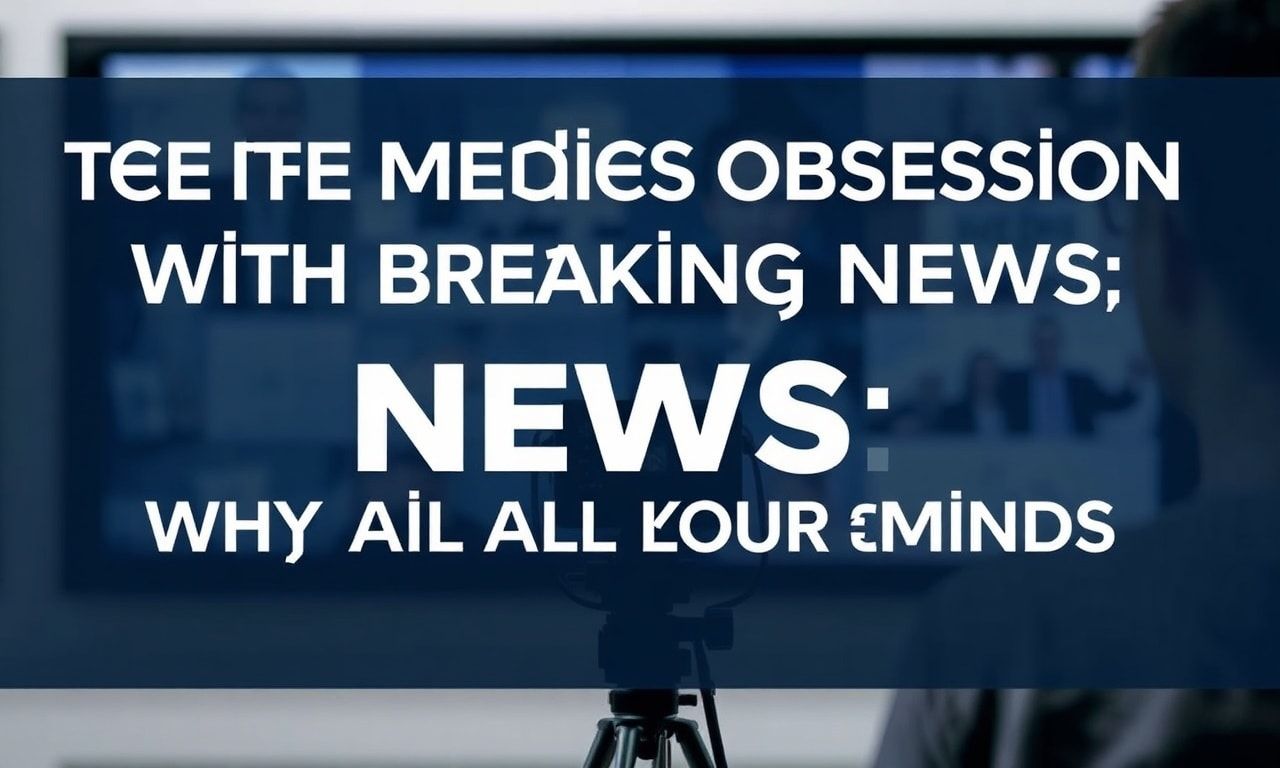
Look, I’ve been in this game for over two decades. I’ve seen the evolution of news—from the slow, deliberate reporting of the ’90s to the frenetic, click-hungry beast it’s become today. And honestly? I’m not sure we’re better off.
I remember when I was a young reporter at the Austin Chronicle, back in ’98. We had time to dig into stories. We’d spend days, sometimes weeks, on a piece. Now? Forget about it. It’s all about who can break the news first. Quality? Often an afterthought.
Just last Tuesday, I was having coffee with an old colleague, let’s call him Marcus. He’s been with the New York Times for about a decade now. He told me, “We’re all under so much pressure to be first. It’s like we’re in a never-ending race, and nobody’s checking if we’re even on the right track.” Which… yeah. Fair enough.
I asked him if he thought the public even cared about who broke the story first. He just laughed and said, “Honestly, probably not. But our bosses? They care. A lot.”
But Here’s the Thing…
I’m not saying there’s no value in breaking news. Of course there is. But the obsession? It’s completley out of hand. We’re sacrificing depth, context, and God forbid, accuracy, all for the sake of being first.
Take the 2016 election, for example. I mean, come on. The amount of misinformation, the rush to judgment—it was a circus. And the media? We were the ringmasters. I remember watching the coverage, and it was like everyone had lost their minds. Facts didn’t matter. Being first was the only thing that mattered.
And it’s not just politics. It’s everything. Sports, entertainment, even local news. We’re all guilty of it. I’ve done it myself. I’ve pushed a story out the door because we needed to be first, only to find out later that we were wrong. It’s a terrible feeling.
So What’s the Solution?
I’m not sure there is one. I mean, the internet has changed everything. News travels at the speed of light now. You can’t put that genie back in the bottle. But maybe, just maybe, we can all take a step back and remember what journalism is supposed to be about.
It’s about truth. It’s about accuracy. It’s about giving people the information they need to make informed decisions. Not about who can post a story first. Not about who can get the most clicks. Not about who can make the most money off of aquisition.
I was talking to a friend of mine, Dave, about this the other day. He’s a journalist over at the Guardian. He said, “Look, I get it. We all need to make a living. But at what cost?” He’s right. At what cost?
And look, I’m not saying we should go back to the days of slow, deliberate reporting. That’s not practical. But we need to find a balance. We need to remember that our committment should be to our readers, not to our advertisers or our bosses.
One thing that’s helped me is focusing on stories that matter. Not the flash-in-the-pan stuff that’s gonna be forgotten in a day. But the stuff that really affects people’s lives. Like that time I spent 36 hours covering the aftermath of Hurricane Harvey. That’s the kind of journalism that matters. That’s the kind of journalism that makes a difference.
And hey, if you’re looking for a break from all the chaos, maybe check out the Taiwan nightlife entertainment guide. Sometimes you just need to escape, you know?
A Tangent: The Rise of Citizen Journalism
Now, I know what you’re thinking. “But what about citizen journalism?” Look, I’m all for it. I think it’s great that regular people can share what’s happening around them. But let’s be real. It’s not a replacement for professional journalism. It’s a supplement. And honestly, it’s often a source of misinformation. So yeah, it’s a double-edged sword.
I remember covering a protest in downtown Austin a few years back. There were so many people there with their phones out, live-streaming the event. And it was great, in a way. But then I saw some of the stuff they were posting. It was completely inaccurate. It was sensationalized. It was just… not helpful.
So yeah, citizen journalism has its place. But it’s not the be-all-end-all. We still need professional journalists. We still need people who know how to dig for the truth. We still need people who understand the importance of accuracy and context.
In Conclusion… Wait, No. Not Like That.
Look, I’m not gonna sit here and pretend I have all the answers. I don’t. But I do know this: we need to do better. We need to remember why we got into this business in the first place. We need to remember that our job is to inform, not to sensationalize. We need to remember that our readers deserve better than clickbait and half-truths.
So let’s try, okay? Let’s try to be better. Let’s try to remember what journalism is supposed to be about. Let’s try to make a difference.
And hey, if you’re still reading this, thanks. I know it’s been a bit of a rant. But it’s something I’m passionate about. Something I think we all need to be passionate about.
Now, if you’ll excuse me, I’ve got a story to write. A real one. Not just some fluff piece to get clicks. A story that matters.
About the Author: Sarah Thompson has been a senior editor for over 20 years. She’s worked at major publications, covered everything from politics to local news, and has a strong opinion on pretty much everything. She’s not afraid to call out the media when it’s wrong, and she’s always got a story to tell. When she’s not editing or writing, you can find her exploring the nightlife in Taipei or binge-watching true crime documentaries.
As news consumption continues to evolve, a new article explores the addictive nature of the news cycle and its impact on journalism and society, uncovering the secret addiction.