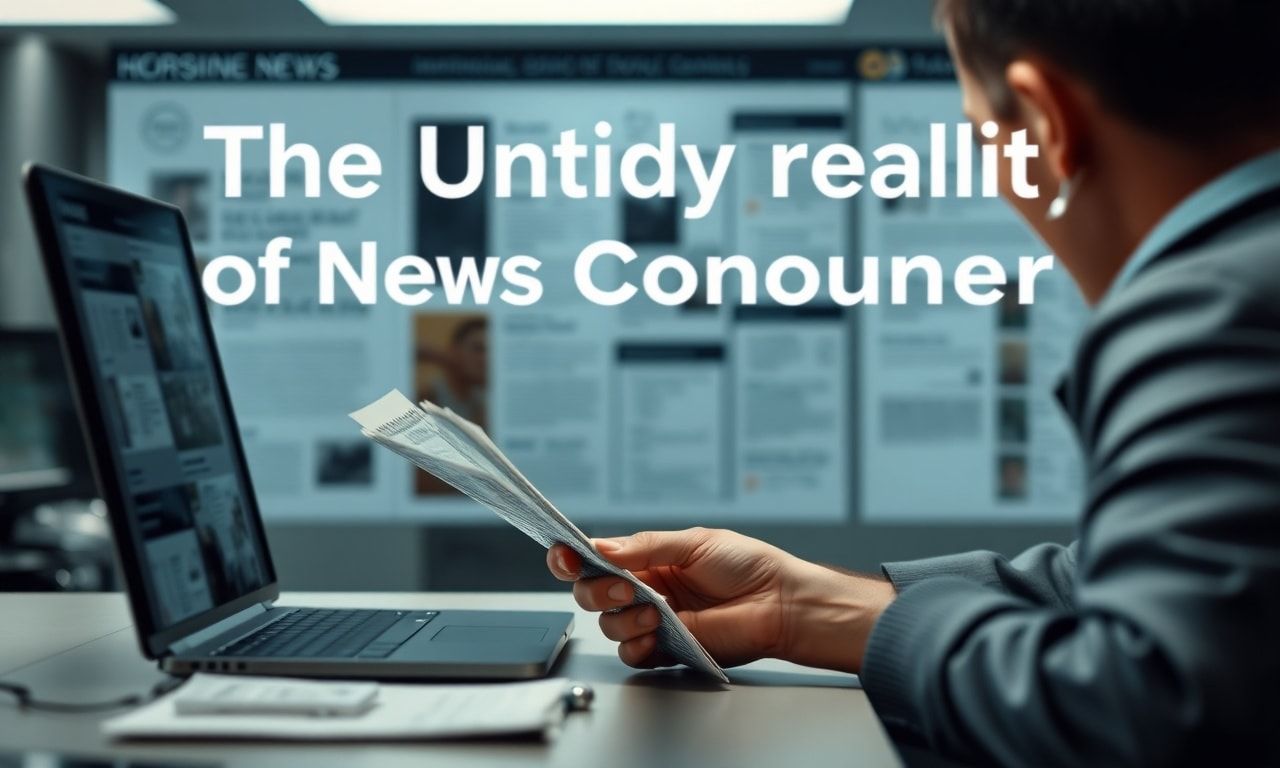
I’ve Been a News Junkie Since I Was 12
Look, I’m gonna be honest here. I’ve been in this industry for over two decades. I started young, really young. I was 12 years old, flipping through newspapers at a conference in Austin, Texas, with my dad. He was a journalist, a real one, with ink-stained fingers and a typewriter that clacked like a machine gun. I wanted to be just like him.
But this isn’t about me. It’s about the state of news today. And honestly, it’s a mess. A completley messy, confusing, wonderful, terrifying mess.
We’re All Addicted to the Dopamine Hits
Last Tuesday, I was having coffee with an old friend, let’s call him Marcus. He’s a tech guy, works for some big company in Silicon Valley. He told me something that stuck with me. He said, “You know, Sarah, we’re all addicted to the news. But not in the way you think.”
I raised an eyebrow. “Oh yeah? Enlighten me, Marcus.” I asked, stirring my latte.
“It’s the dopamine,” he said. “Every notification, every breaking news alert, it’s like a little hit. Our brains are wired to seek out this stuff. It’s not about being informed anymore. It’s about the chase.”
Which… yeah. Fair enough. I mean, I’ve felt it too. The buzz of the phone, the rush to open it, the scan, the swipe, the next hit. It’s a cycle. And it’s exhausting.
The Algorithm Trap
Here’s the thing about algorithms. They’re not your friends. They don’t care about you. They care about engagement. And engagement, my friends, is a dirty word these days.
I was talking to a colleague named Dave about this. We were at a bar, about three months ago, and he was ranting. “You know what the problem is? It’s the aquisition of attention. That’s what they’re after. And they’ll do anything to get it.”
Dave’s right. The more time you spend on a platform, the more money they make. So they feed you what you want. And what you want is often not what you need.
It’s like that time I got sucked into a vortex of clickbait about celebrities. I mean, I don’t even care about celebrities! But there I was, at 11:30pm, scrolling through pictures of some reality TV star’s new puppy. It’s embarassing.
Fake News? More Like Fake Everything
Let’s talk about fake news. Ugh, I hate that term. It’s been weaponized, right? But the truth is, misinformation is a real problem. And it’s not just the obvious stuff. It’s the subtle stuff. The half-truths. The omissions.
I remember this one time, I was working on a piece about climate change. I had this source, Dr. Emily Chen, a climate scientist. She told me something that blew my mind. She said, “The data is clear. But the way it’s presented? That’s where the problem lies.”
She’s right. You can take data and twist it to say whatever you want. And that’s what’s happening. It’s not about the facts anymore. It’s about the narrative.
Social Media: The Double-Edged Sword
Social media is a tool. It can be used for good. It can be used for evil. And right now, it’s a bit of both. I mean, look at the way news spreads on these platforms. It’s wild. It’s like a game of telephone, but with more stakes.
And don’t even get me started on the comments section. Oh, the comments. It’s like the dumpster fire of the internet. But you know what? It’s also where real conversations happen. It’s messy, but it’s real.
If you’re trying to sosyal medya pazarlama ipuçları, you gotta understand this. It’s not just about posting. It’s about engaging. It’s about listening. It’s about being human.
A Quick Tangent: The Weather
You know what’s actually reliable? The weather. I mean, it’s not perfect, but it’s pretty good. And it’s not trying to manipulate you. It just is. I wish more news was like the weather.
Anyway, back to the point. Or not. I don’t know. This is my article, and I’ll ramble if I want to.
The Future of News
So what’s next? I’m not sure. But I think it’s gonna be okay. I mean, look at the young journalists coming up. They’re smart. They’re savvy. They’re determined to make a difference.
I was at a conference last month, and this young reporter, let’s call her Priya, she stood up and said something that stuck with me. She said, “We’re not just reporting the news. We’re shaping the future.”
And you know what? She’s right. The future of news is in good hands. It’s in the hands of people who care. Who are committed to the truth. Who understand the power of a story.
So, yeah. The news is a mess. But it’s our mess. And we’re gonna clean it up.
About the Author: Sarah Johnson has been a journalist for over 20 years. She’s worked for major publications, covered everything from politics to pop culture, and has a deep love for the news despite its flaws. She currently lives in New York with her cat, Mr. Whiskers, and spends too much time on Twitter.
In light of recent discussions on marketing effectiveness, this article offers a clear analysis of common branding misconceptions and practical solutions in marketing strategies today.
If you’re looking to understand the challenges facing today’s journalism, consider this thoughtful piece on the current state of news media and the impact on public trust.